
Showing all 4 results
-
Best Selling Products, Minoxidil Hair Regrowth
Original price was: £111.00.£60.00Current price is: £60.00. Add to cart -
Best Selling Products, Minoxidil Hair Regrowth
Original price was: £49.00.£25.00Current price is: £25.00. Add to cart -
Best Selling Products, Minoxidil Hair Regrowth
Original price was: £39.89.£18.00Current price is: £18.00. Add to cart -
Best Selling Products, Minoxidil Hair Regrowth
Original price was: £39.89.£23.00Current price is: £23.00. Add to cart

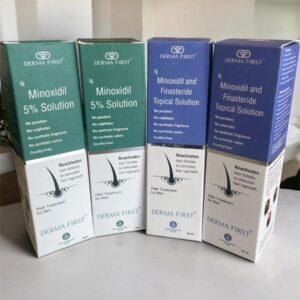
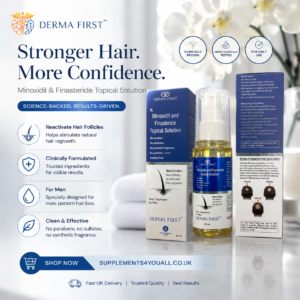
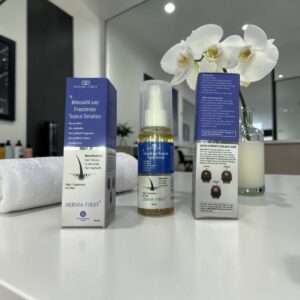
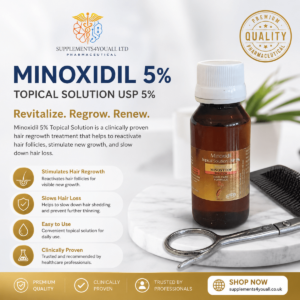
Showing all 4 results
Minoxidil is a topically applied treatment that extends the hair growth phase and improves blood flow to hair follicles, making it one of the most effective options for addressing androgenetic alopecia in both men and women. Originally developed for hypertension, its hair regrowth benefits were discovered as a side effect, leading to its development as a clinically proven topical solution.
How Minoxidil Works
Minoxidil functions as a vasodilator, improving blood circulation to hair follicles and shifting them from the resting phase into the active growth phase. This process extends hair growth duration and produces thicker, healthier hair shafts over time. Consistent use typically produces measurable results between 3 to 12 months.
Minoxidil Concentrations
Minoxidil is available in various strengths, with 5% being the most established and widely used concentration. This strength has demonstrated robust clinical evidence for effectiveness in both men and women experiencing pattern hair loss. Higher concentrations are sometimes used off-label, though evidence for superior efficacy remains limited.
Combining Minoxidil with Finasteride
Minoxidil is frequently combined with finasteride for enhanced results. Minoxidil stimulates regrowth whilst finasteride prevents further loss by reducing DHT production. This dual approach addresses hair loss through two mechanisms simultaneously, producing superior outcomes compared to either treatment alone.
Expected Results and Timeline
Most users experience increased shedding during the first 2 to 4 weeks as dormant follicles transition into active growth, a positive sign that treatment is working. Subtle improvements appear around weeks 4 to 8, with visible regrowth typically emerging between weeks 12 and 16. Maximal results generally appear between 6 and 12 months of consistent use.
Application Best Practices
Apply minoxidil to a dry scalp once or twice daily. Use the recommended application volume (typically 1ml for solutions), allow it to dry completely, and avoid washing hair immediately after application. Consistency is the primary determinant of efficacy.
Related Articles
Learn more about minoxidil treatment and hair regrowth strategies:
- How to correctly apply minoxidil and finasteride topical solutions for best results: https://supplements4youall.co.uk/how-to-correctly-apply-a-combined-minoxidil-and-finasteride-solution-for-best-results/
- Does minoxidil and finasteride topical solution work for hair loss treatment: https://supplements4youall.co.uk/does-minoxidil-and-finasteride-topical-solution-work-for-hair-loss-treatment/
- Topical finasteride vs oral, which is better for hair loss treatment: https://supplements4youall.co.uk/topical-finasteride-vs-oral-which-is-better-for-hair-loss-treatment/
Frequently Asked Questions
How long does minoxidil take to work?
Most users notice initial signs of regrowth after 3 to 4 months of consistent use. Optimal results typically appear between 6 and 12 months. Results vary by individual based on hair loss stage, genetics, and application consistency. Starting treatment early yields better outcomes.
What’s the benefit of combining minoxidil with finasteride?
Minoxidil stimulates hair regrowth by improving follicle blood flow, whilst finasteride prevents further hair loss by blocking DHT production. Together, they address hair loss from two angles, making combination treatments highly effective for moderate to advanced hair loss.
Can men and women use minoxidil equally?
Yes, minoxidil 5% works effectively for both genders. Men typically experience more localised regrowth, whilst women more often observe overall density improvement and reduced shedding. Formulation preferences may vary between individuals based on hair type and lifestyle.
What should I expect during the first month?
During the first 2 to 4 weeks, many users experience increased shedding as dormant follicles transition into active growth. This shedding is temporary and indicates treatment is engaging with the hair cycle, not that it’s failing.
What happens if I stop using minoxidil?
Hair regrowth achieved through minoxidil is not permanent. Discontinuing treatment typically results in return to baseline hair loss patterns within 3 to 6 months, as minoxidil addresses symptoms rather than underlying genetic predisposition.