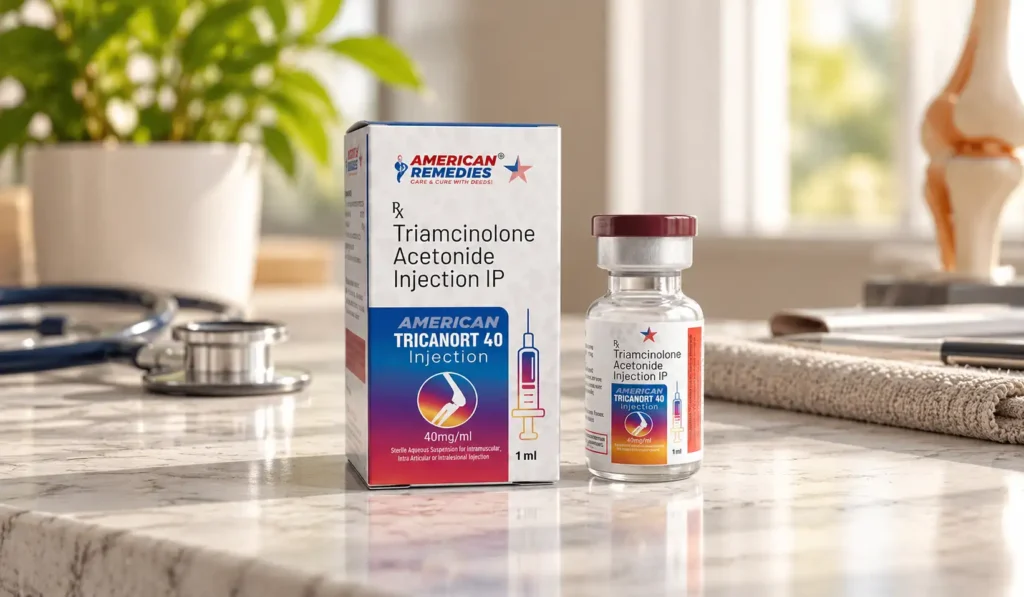
Triamcinolone is a corticosteroid medication used to reduce inflammation, swelling and allergic reactions. It is available in different forms, including creams and injections, which are prescribed according to the condition being treated.
While creams mainly treat skin inflammation, injections can provide targeted or systemic anti-inflammatory treatment, depending on the formulation and administration method. This guide explains their key differences, benefits, potential side effects and when each treatment may be recommended.
What Is Triamcinolone and How Does It Work?
Triamcinolone is a corticosteroid medication that reduces inflammation by controlling the body’s inflammatory and immune responses. It helps relieve swelling, redness, itching and irritation.
Common triamcinolone uses include treating skin conditions, joint inflammation, allergic reactions and certain autoimmune disorders. Its effects depend on how the medication is delivered, the prescribed dose and the condition being managed.
Key Differences Between Triamcinolone Cream and Injections
The main differences involve how the medication enters the body, which conditions it treats and how long its effects last.
Method of Administration
Cream: Applied directly to the affected skin in a thin layer, as prescribed. It works mainly on the treated area to reduce redness, itching and inflammation.
Injection: A triamcinolone injection is administered by a qualified healthcare professional. Depending on the specific product, it may be given into a muscle, joint or other approved treatment site. Intramuscular injections deliver the medication into muscle tissue, allowing gradual absorption into the bloodstream.
Medical Uses and Conditions Treated
Triamcinolone creams may be prescribed to treat inflammatory skin conditions such as eczema, dermatitis and certain types of psoriasis. They provide localised treatment to help control visible skin symptoms and discomfort.
Injections may be prescribed for certain severe allergic conditions, inflammatory conditions and autoimmune disorders. A triamcinolone acetonide injection may be recommended when systemic corticosteroid treatment is needed. The choice depends on the diagnosis, the required treatment effect and the approved use of the formulation.
Absorption and How They Work in the Body
Triamcinolone creams are absorbed through the skin and work mainly on the affected area. Systemic absorption is generally limited when applied correctly, although absorption varies with the application area, skin condition and treatment duration.
Intramuscular injections are gradually absorbed into the bloodstream, allowing the corticosteroid to act throughout the body. They may be prescribed when a sustained systemic anti-inflammatory effect is clinically required.
Effectiveness and Duration of Action
Triamcinolone creams may start relieving symptoms within a few days. They usually require regular application for the prescribed period to achieve the intended treatment response.
Injections may also begin working within a few days, with effects lasting several weeks depending on the dosage, formulation and condition treated. Some injectable formulations provide prolonged anti-inflammatory effects, although the duration of relief varies between individuals.
Potential Side Effects and Safety Precautions
Triamcinolone creams and injections can help manage inflammation effectively when used as prescribed. Like all corticosteroids, they require careful use to minimise the risk of triamcinolone side effects.
Topical treatments should be used as prescribed, while injectable treatments require administration and monitoring by a qualified healthcare professional. Before starting treatment, inform your doctor about existing health conditions and any medicines you take. This helps your healthcare professional assess suitability and choose an appropriate treatment plan.
Which Is Better for Your Condition: Triamcinolone Cream or Injection?
Choosing between topical and injectable treatment involves assessing how widespread the condition is, how well previous treatments have worked and whether sustained anti-inflammatory action is required.
For mild or manageable skin conditions, topical treatment may be sufficient. For selected conditions requiring systemic corticosteroid therapy, an intramuscular injection may be considered following a medical assessment.
The most effective treatment is not necessarily the strongest formulation, but the one best suited to your condition. Your doctor can recommend a suitable option based on your diagnosis and treatment goals.
Conclusion
Triamcinolone creams and injections provide different ways of managing inflammation, each with its own clinical purpose. Creams offer localised treatment for suitable skin conditions, while injections may provide targeted or wider anti-inflammatory effects. Understanding these differences can help you make informed decisions with your healthcare professional.
At Supplements4YouAll, we offer triamcinolone acetonide injections for appropriate medical use. Explore our product information to learn more about the available formulation, and always consult a qualified healthcare professional before starting treatment.
Frequently Asked Questions
Is triamcinolone injection stronger than triamcinolone cream?
Injections can provide a more widespread anti-inflammatory effect, depending on the formulation and dosage. However, creams are often sufficient for treating localised skin inflammation. The most suitable option depends on the condition being treated.
Can triamcinolone cream and injections treat the same conditions?
Both can help manage certain inflammatory conditions, but their medical applications differ. Creams are generally used for skin problems, while injections may be prescribed for conditions requiring systemic treatment or treatment of deeper tissues, depending on the formulation.
How long does triamcinolone cream take to work compared to injections?
Creams may start improving symptoms within a few days, while injections can also begin working within days. Depending on the formulation and condition, the effects of an injection may last several weeks.
Can triamcinolone cream and injections be used together?
Yes, a doctor may prescribe both treatments when clinically appropriate. The decision depends on the overall corticosteroid exposure, the condition being treated and the patient’s medical history.
Are triamcinolone injections more effective than cream for skin conditions?
Not necessarily. Creams are usually considered for suitable surface-level skin inflammation. Specialist injections may be appropriate for selected conditions, although their formulation and administration route must match the intended treatment.